E-commerce
A footwear store with the back office that runs it
BeforeBuilt to show what a complete online shop involves — not just the shopping, but the running of it.
NowA storefront and an admin panel that share one product model, down to the size and colour.
The situation
A concept build rather than client work, made to demonstrate a complete e-commerce setup end to end.
Most storefront demos stop at the shopping experience, which is the easy half. The part that decides whether a shop can actually be run is the panel behind it — and specifically, whether the two halves agree about what a product is.
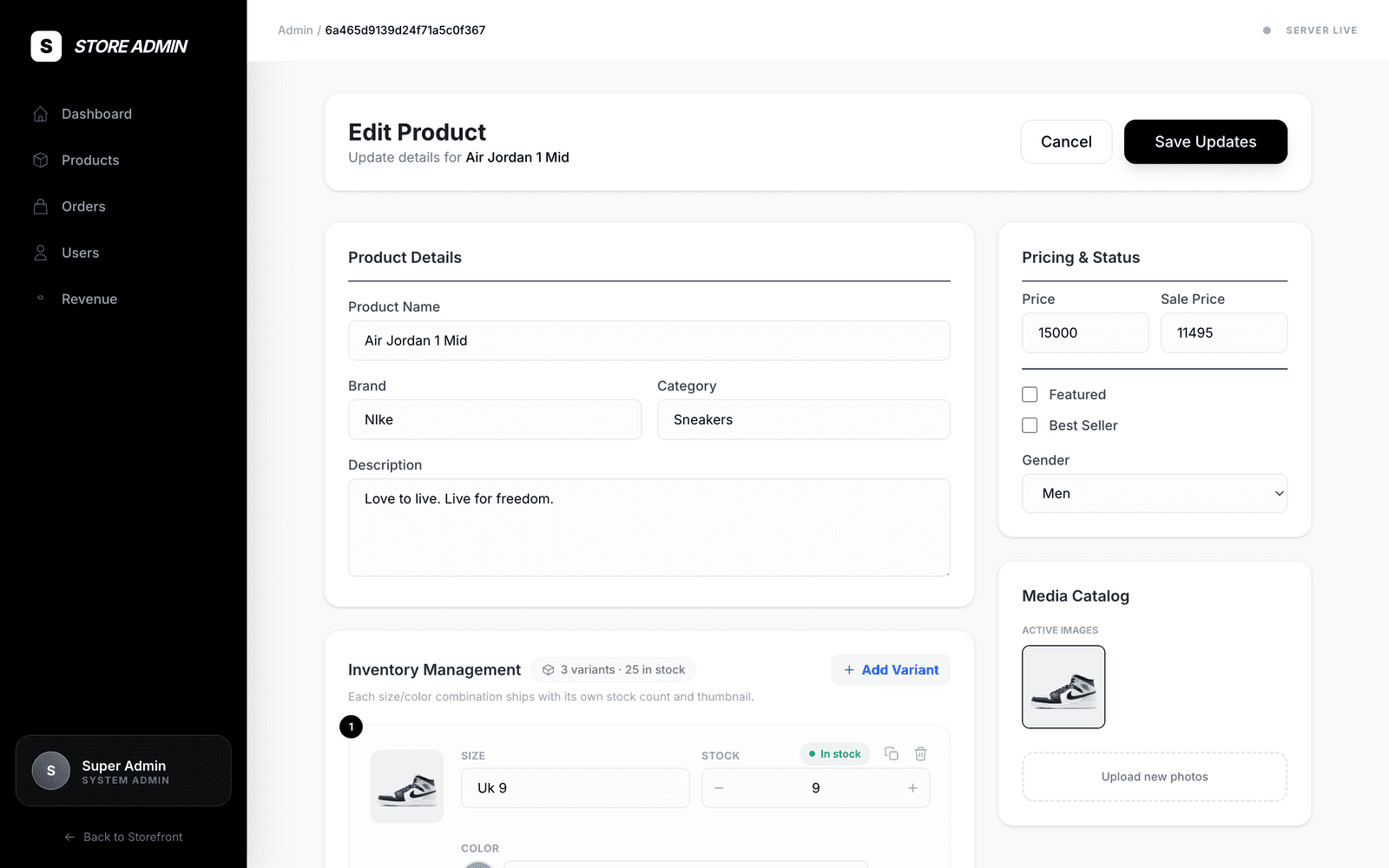
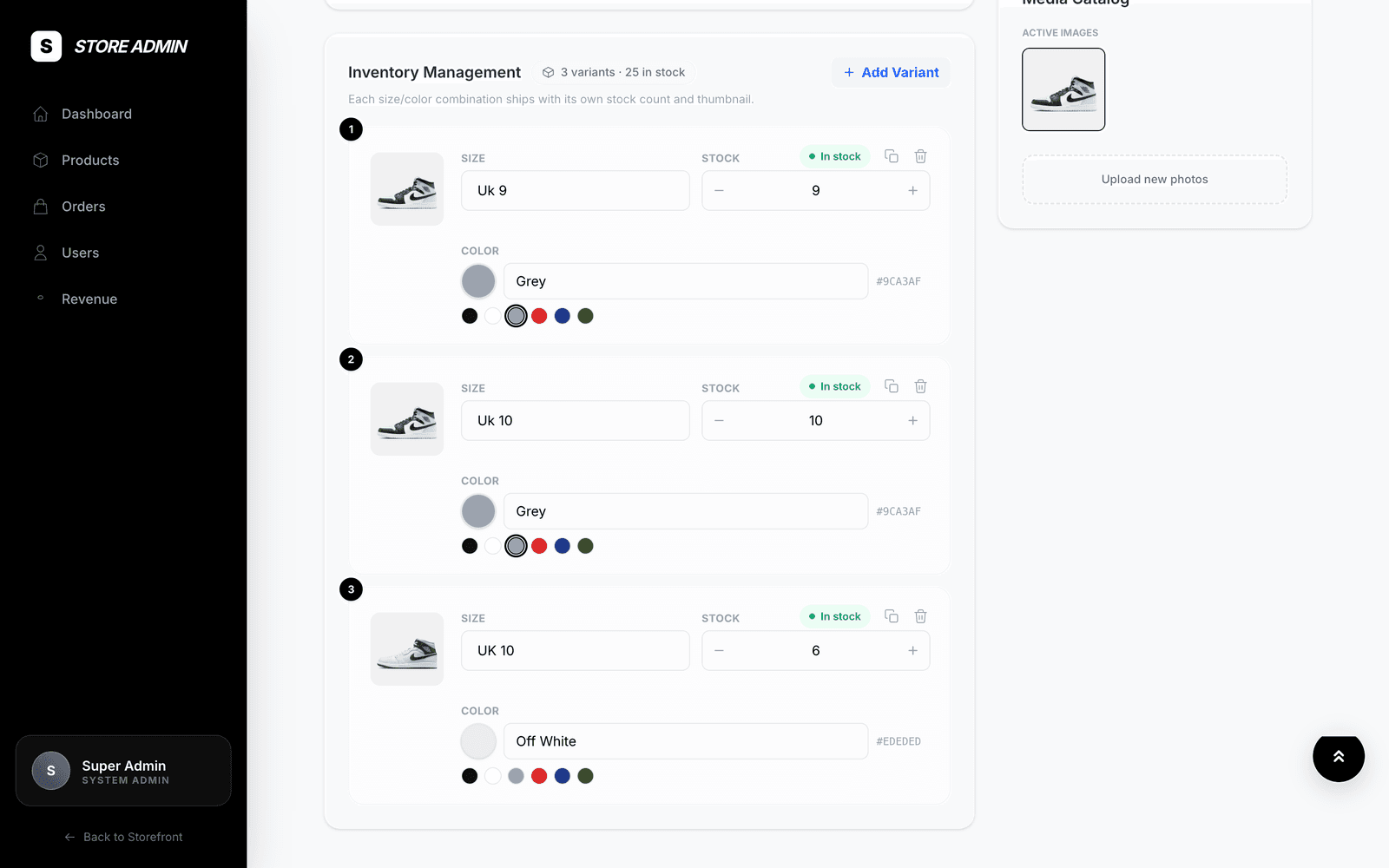
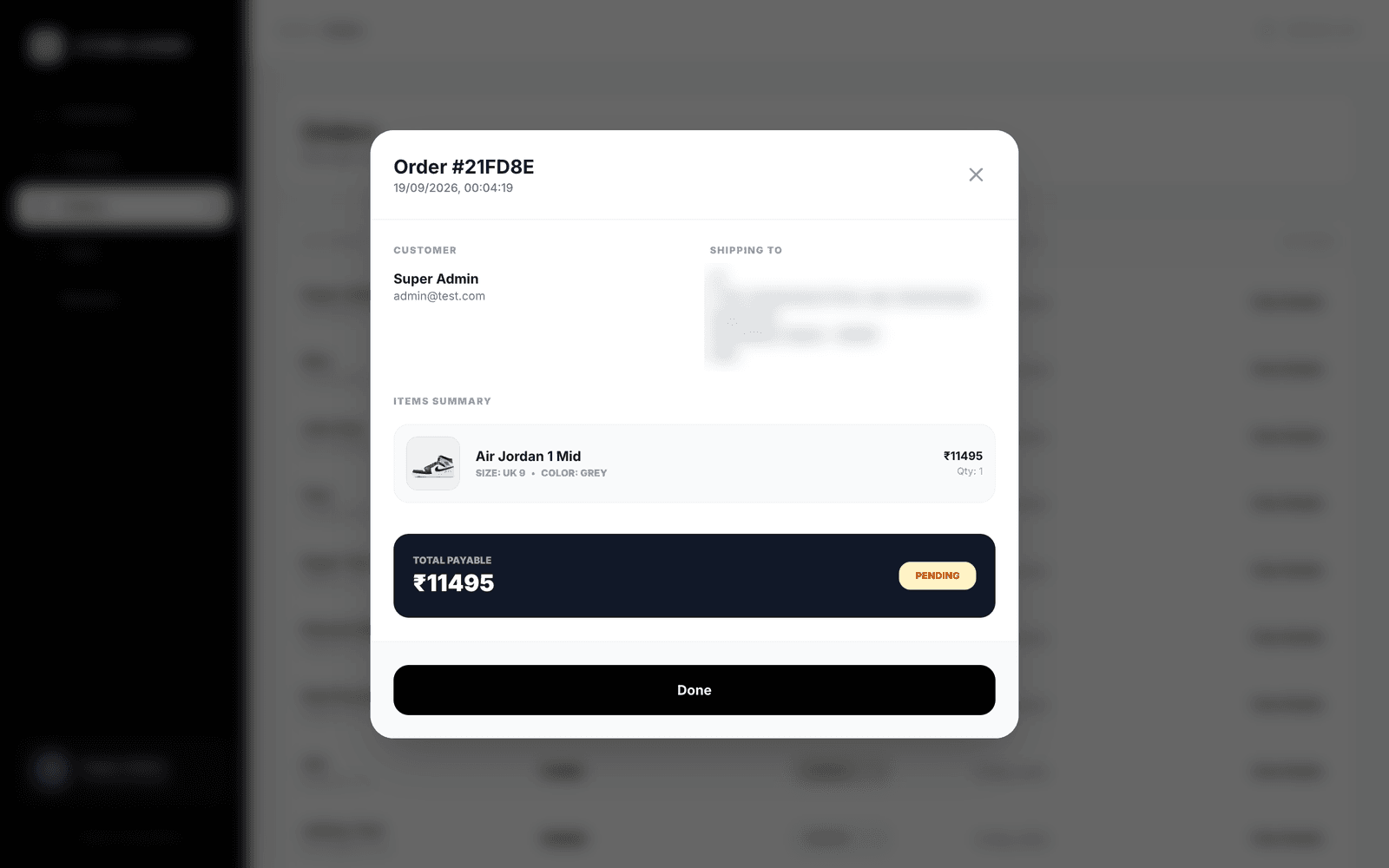
Footwear makes that concrete. A shoe isn’t one thing in stock; it’s a size in a colour. So the same variant a customer picks on the product page is the row the owner counts in the admin panel, and an order reserves that variant rather than the product.
What I built
Finding something
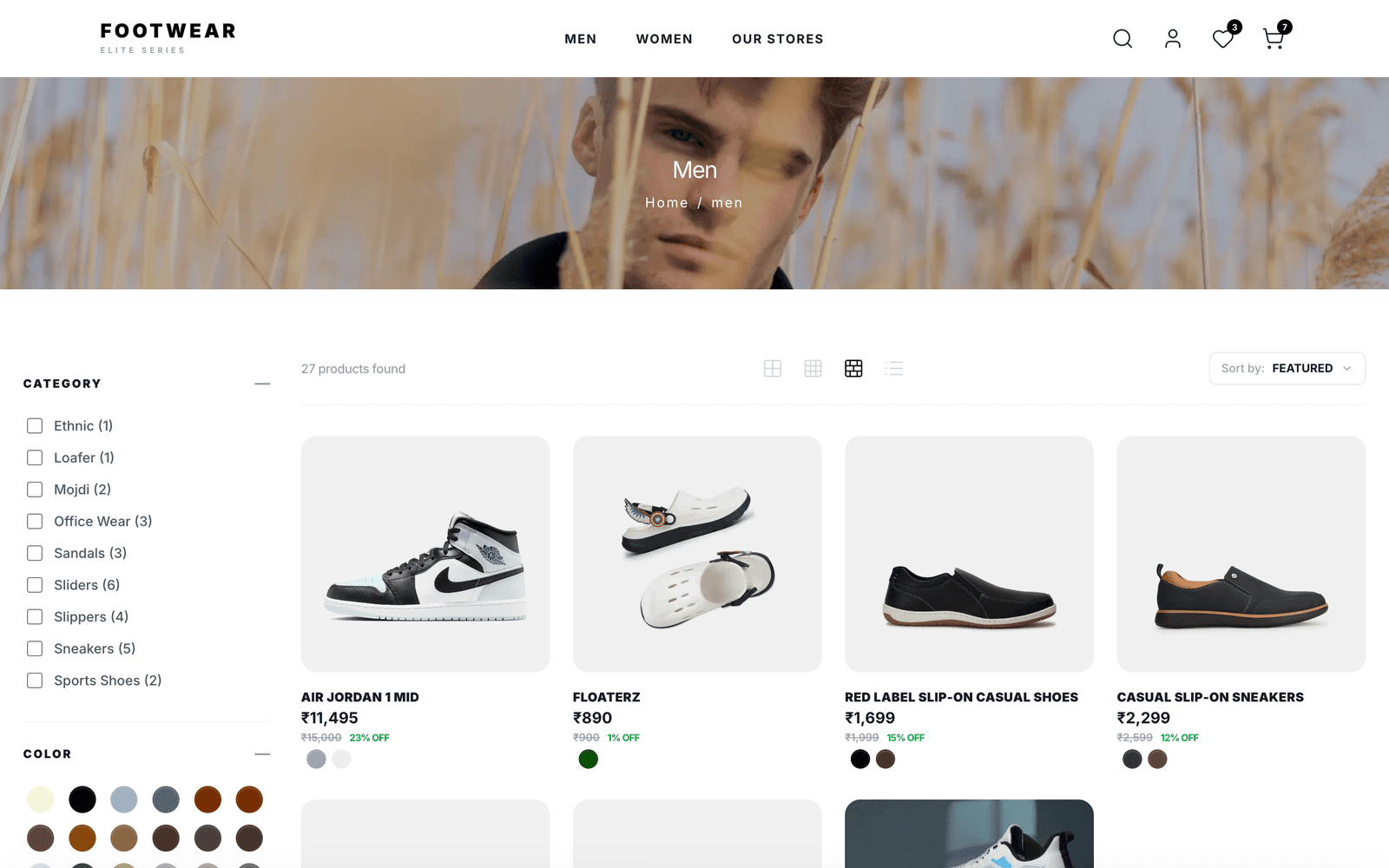
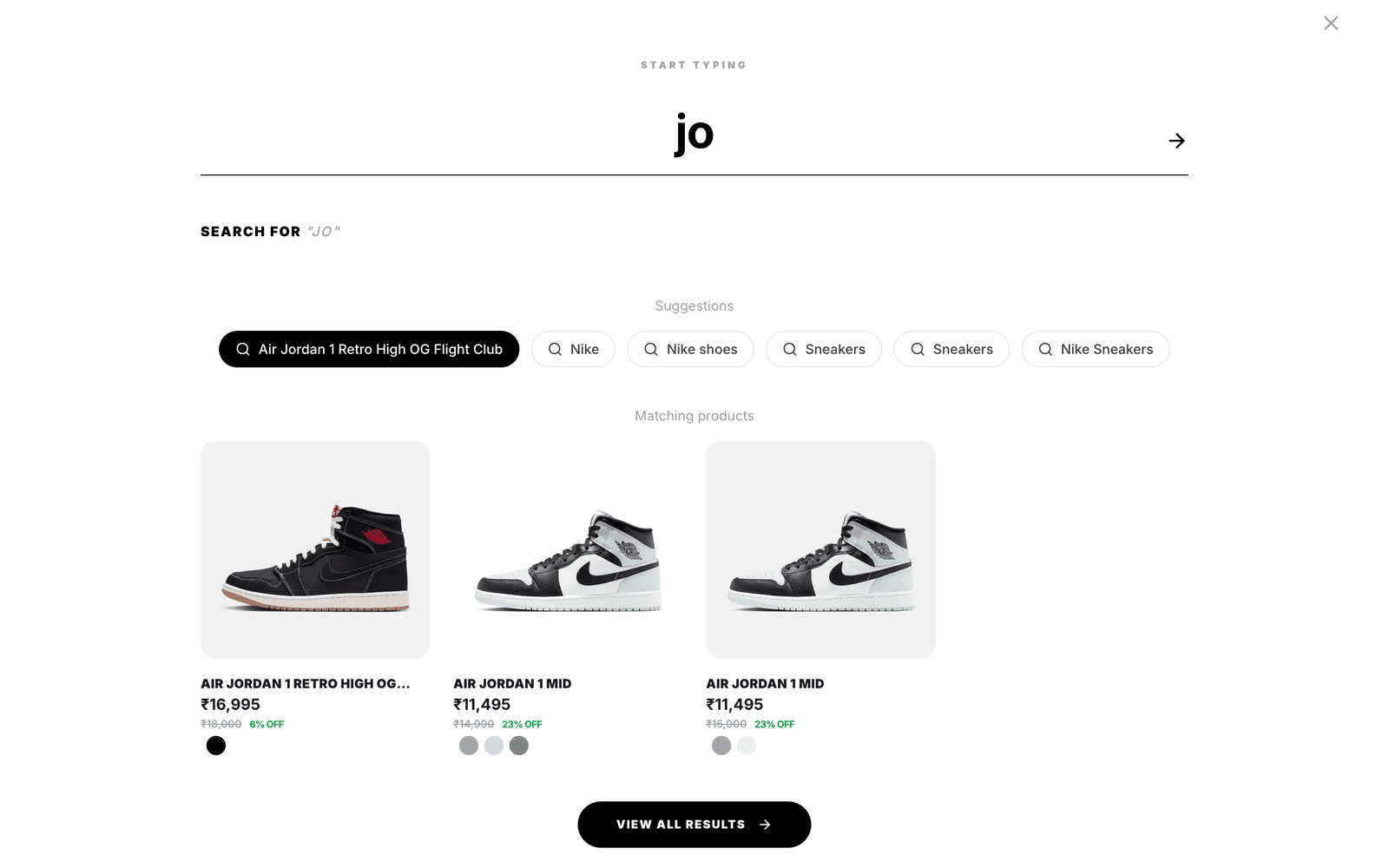
Category counts, colour swatches, four grid densities and sorting on the listing. Search suggests as you type and shows matching products before you commit to a results page.
Buying it
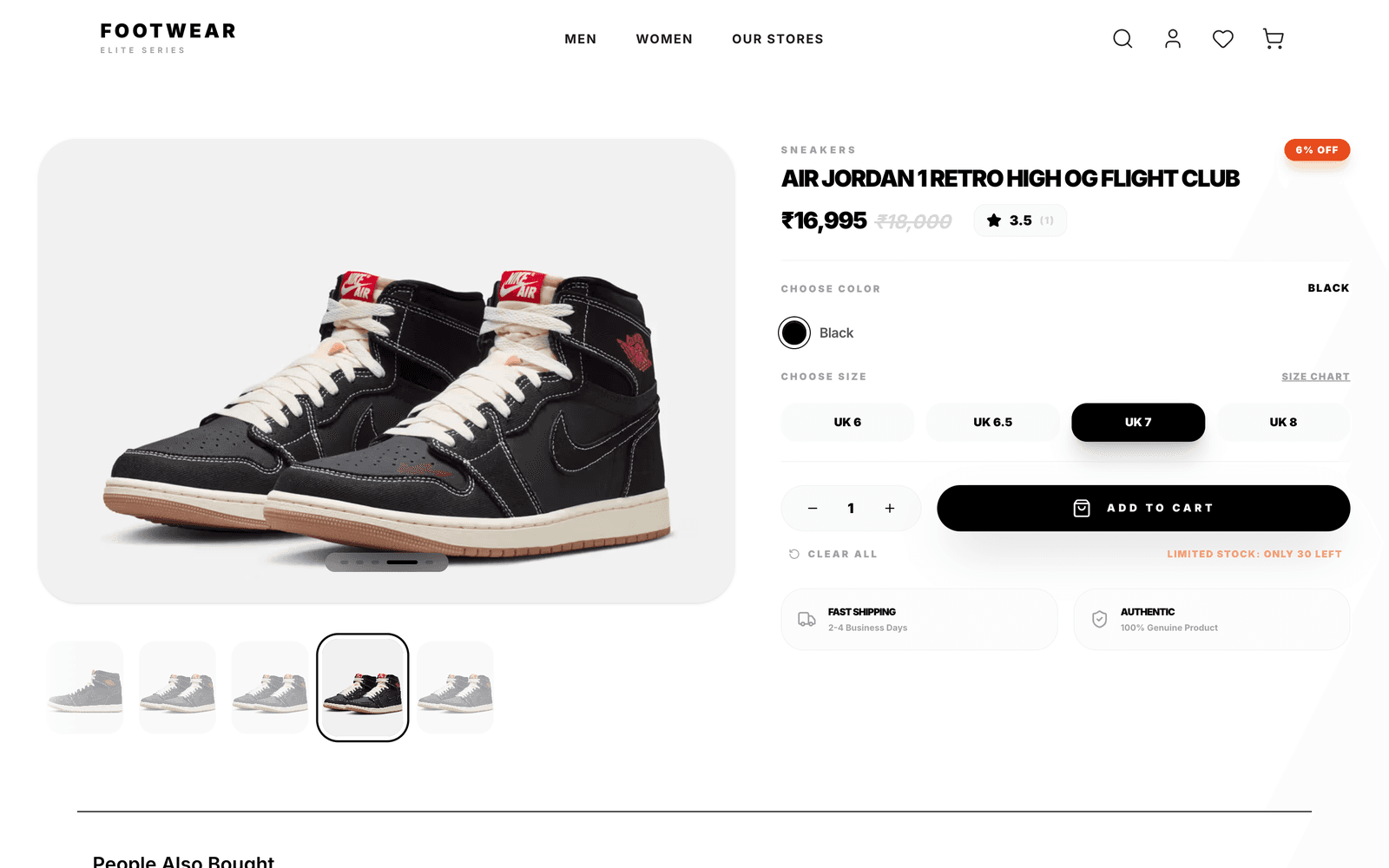
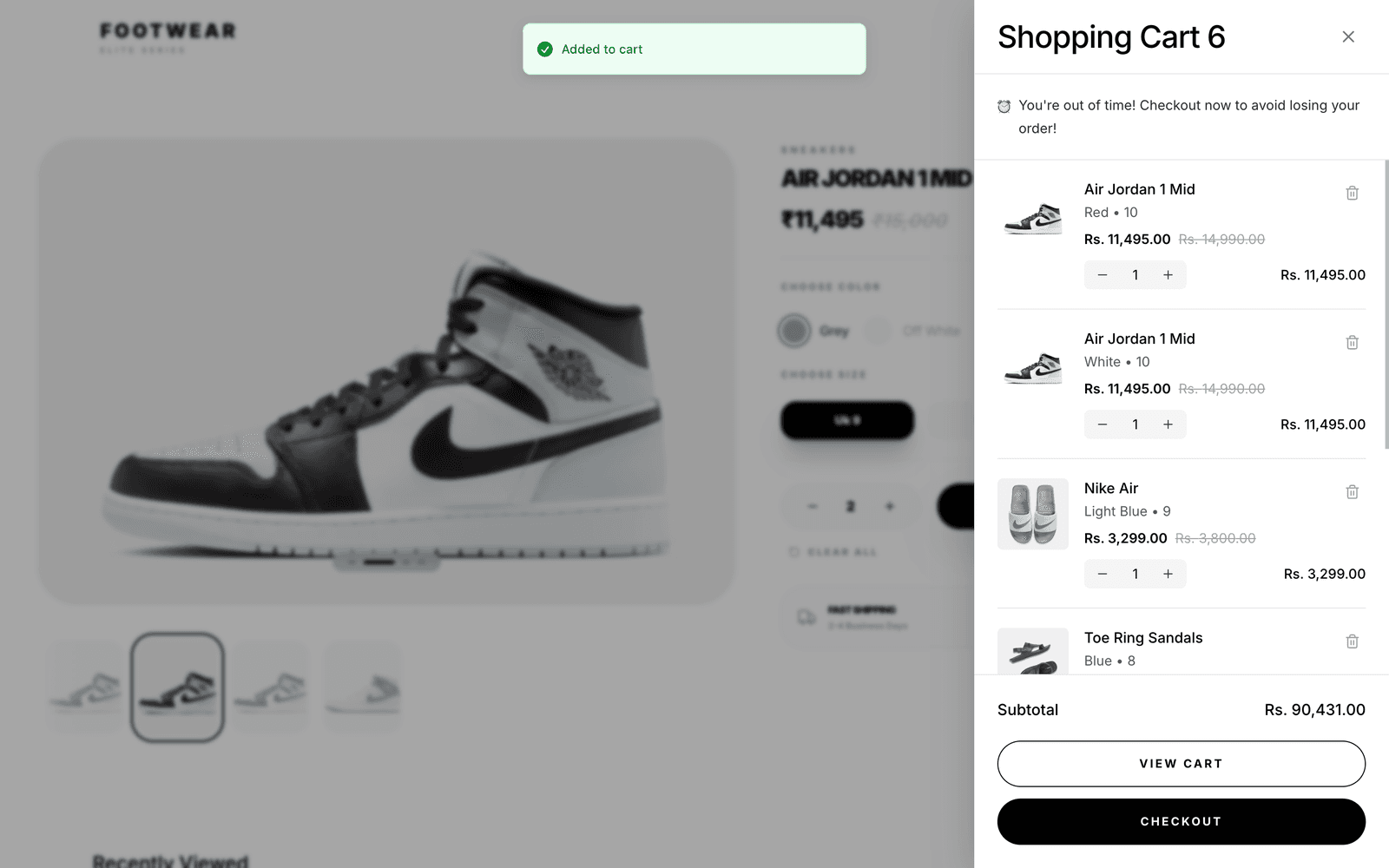
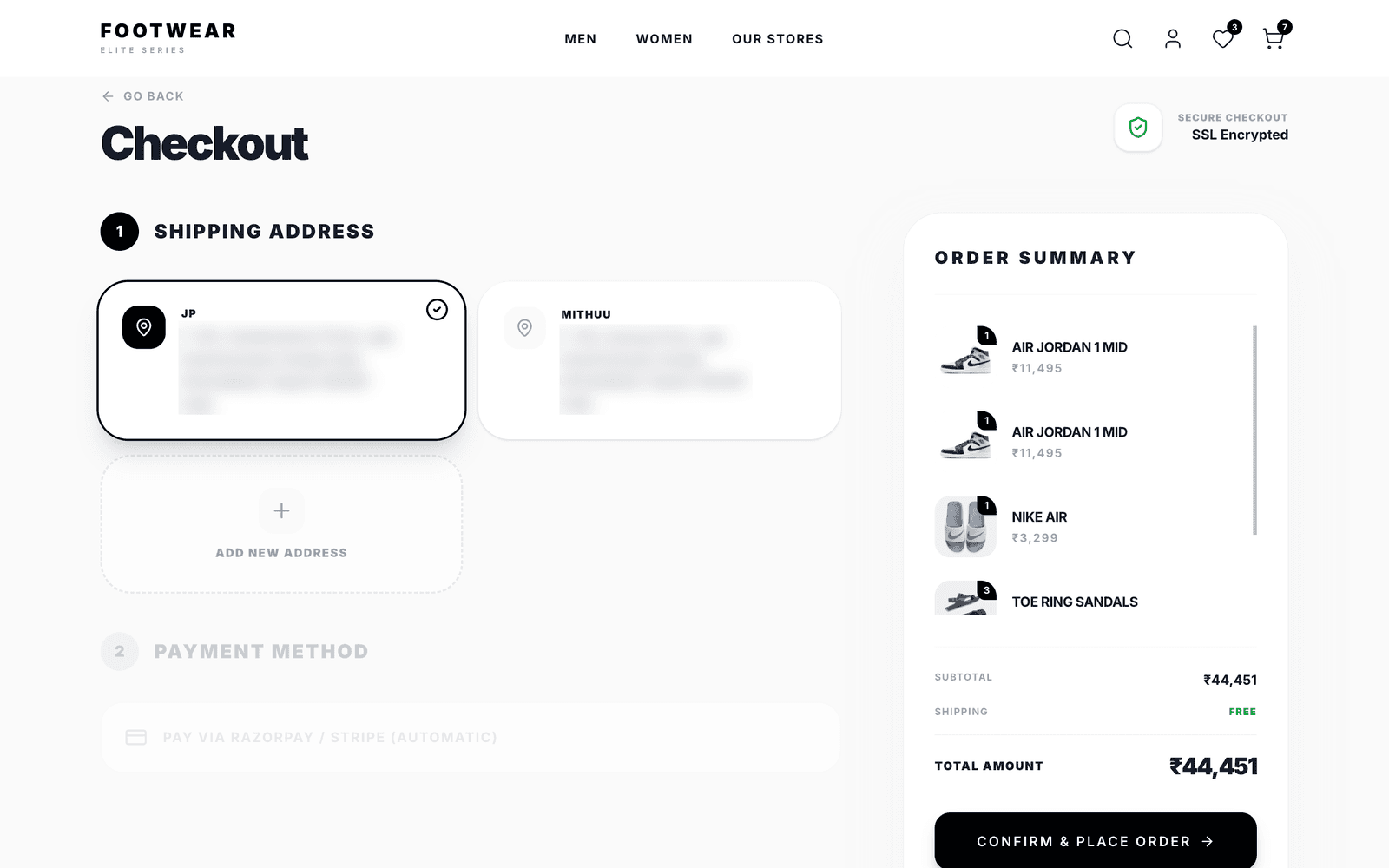
Colour and size picked on the product page, with live stock for that exact combination. The cart holds each variant as its own line and reserves it on a timer, and checkout moves through saved addresses to payment without leaving the page.
The catalogue behind it
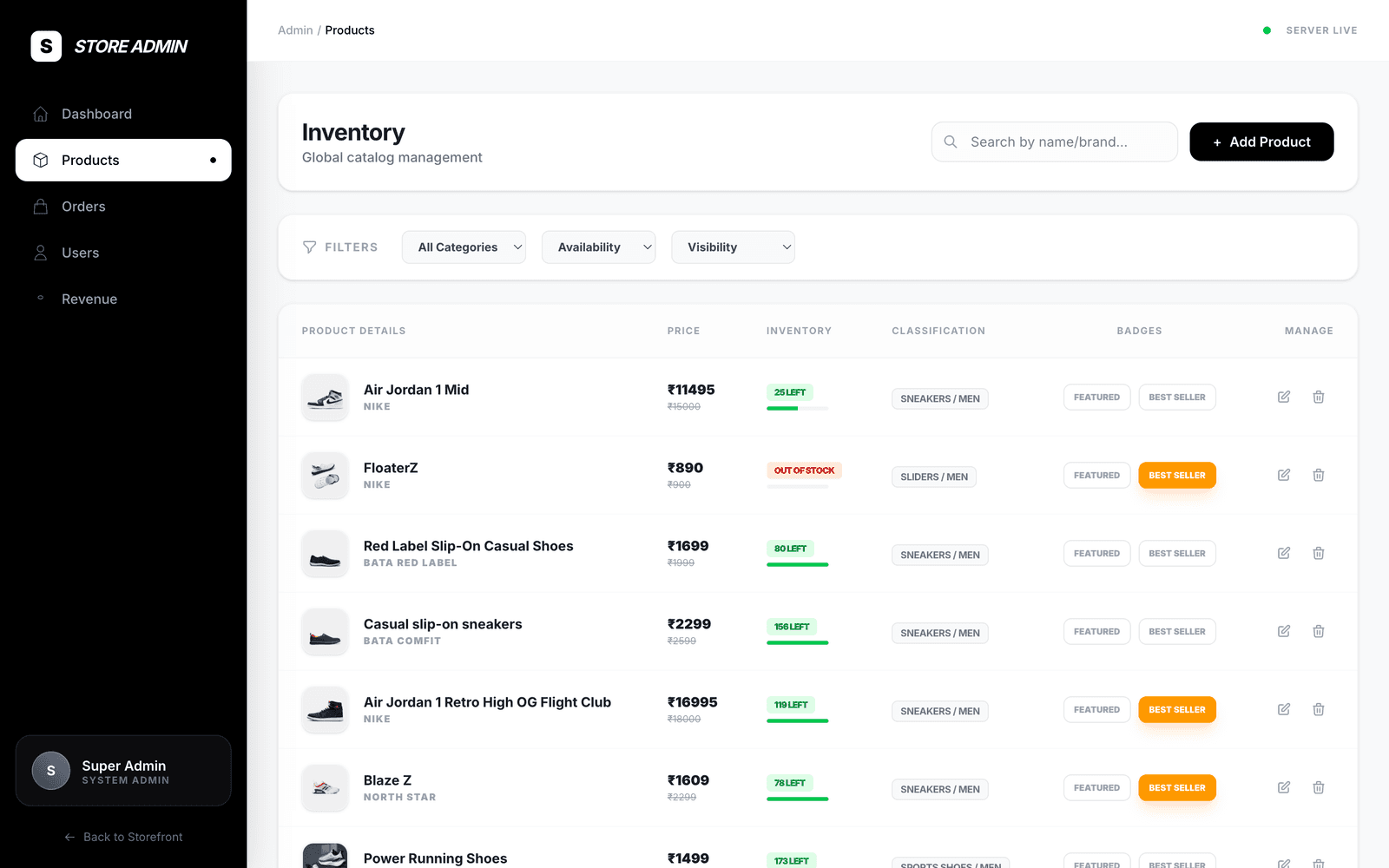
Stock, pricing and visibility across the catalogue at a glance, with out-of-stock flagged. Each product carries its own variants — every size and colour with its own count, thumbnail and hex value — plus the Featured and Best Seller badges that drive the storefront.
Orders and customers
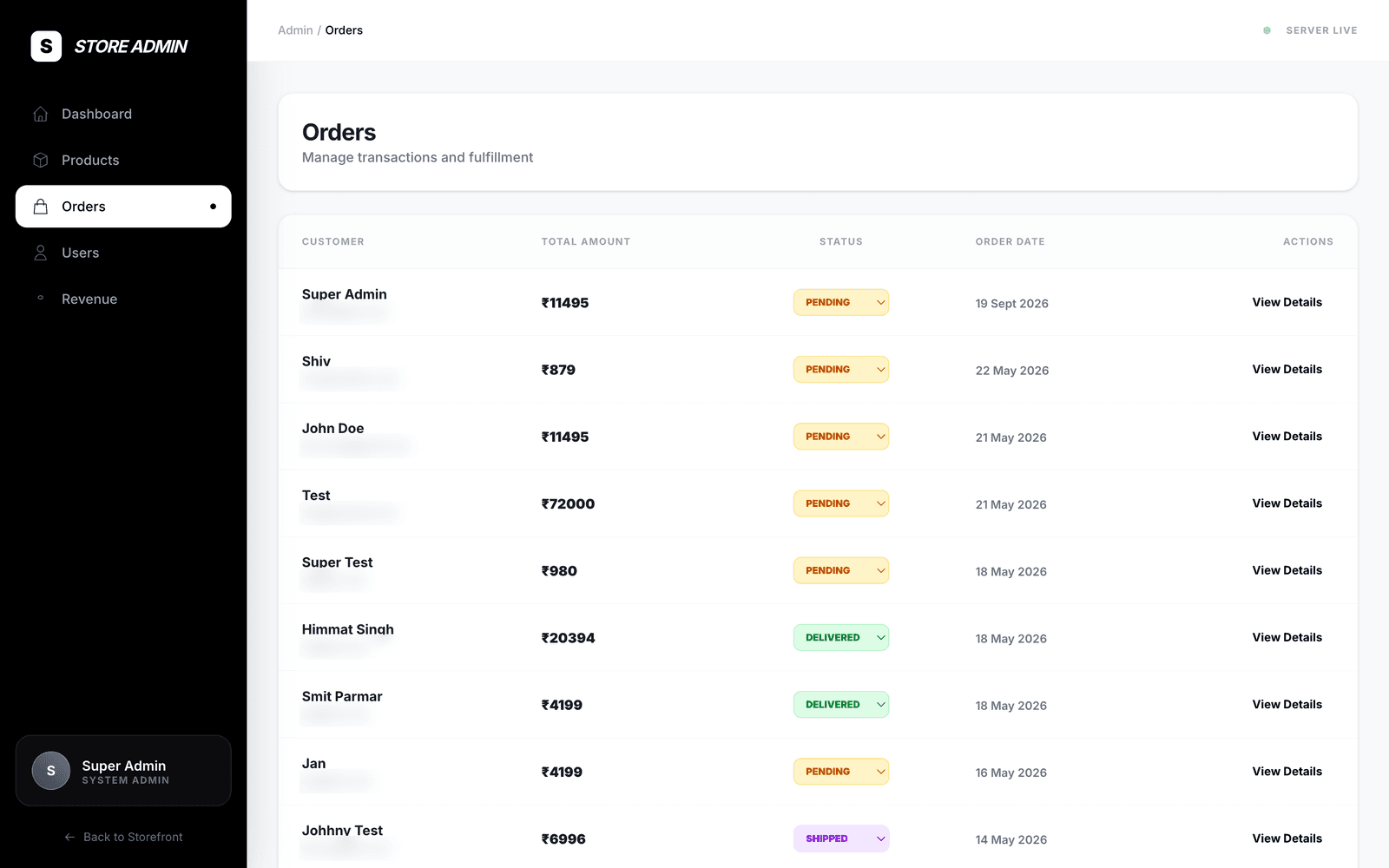
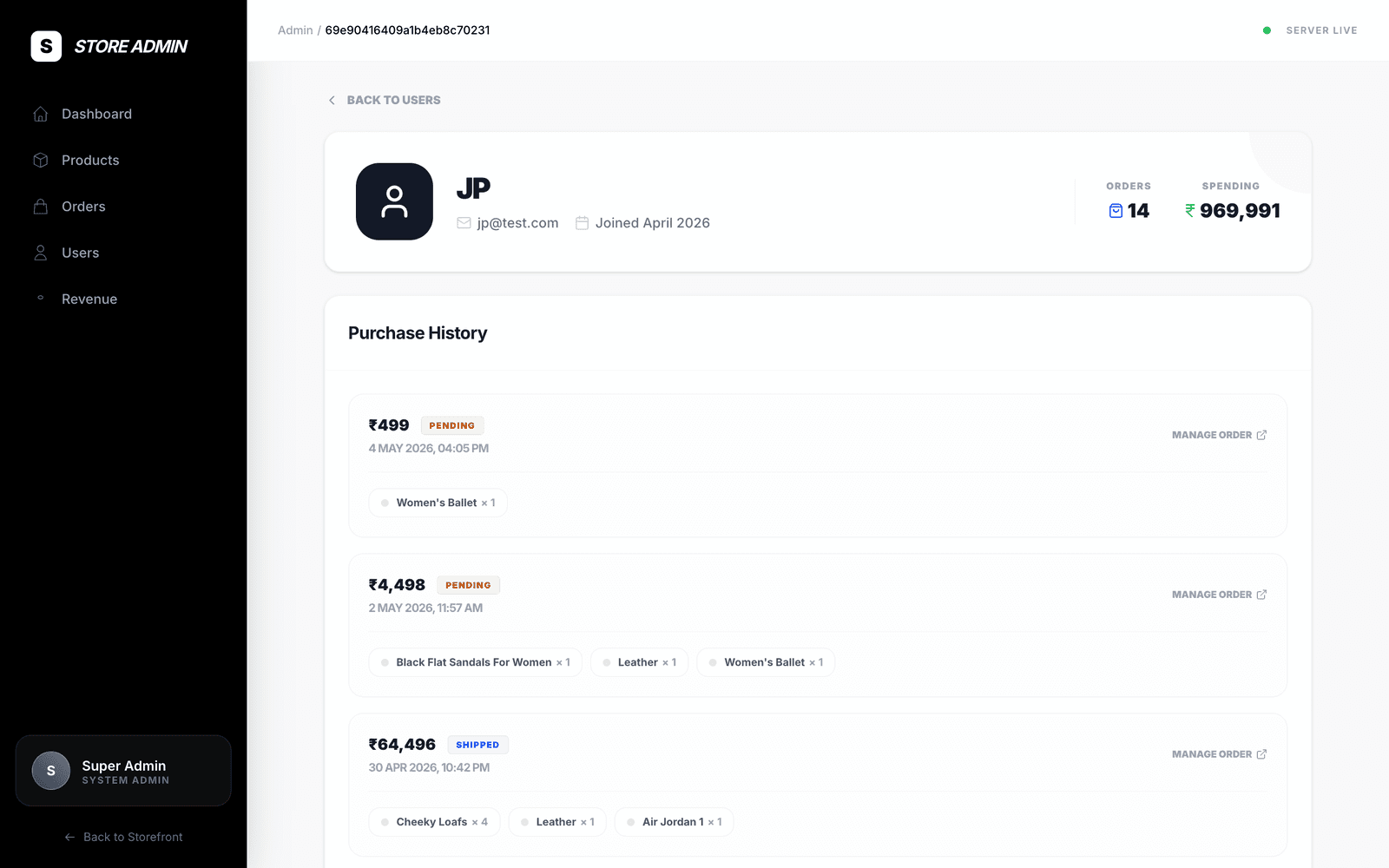
Status moves from pending to shipped to delivered from the list itself. Opening an order shows the exact variant bought and where it’s going, and every customer has a purchase history with their lifetime spend.
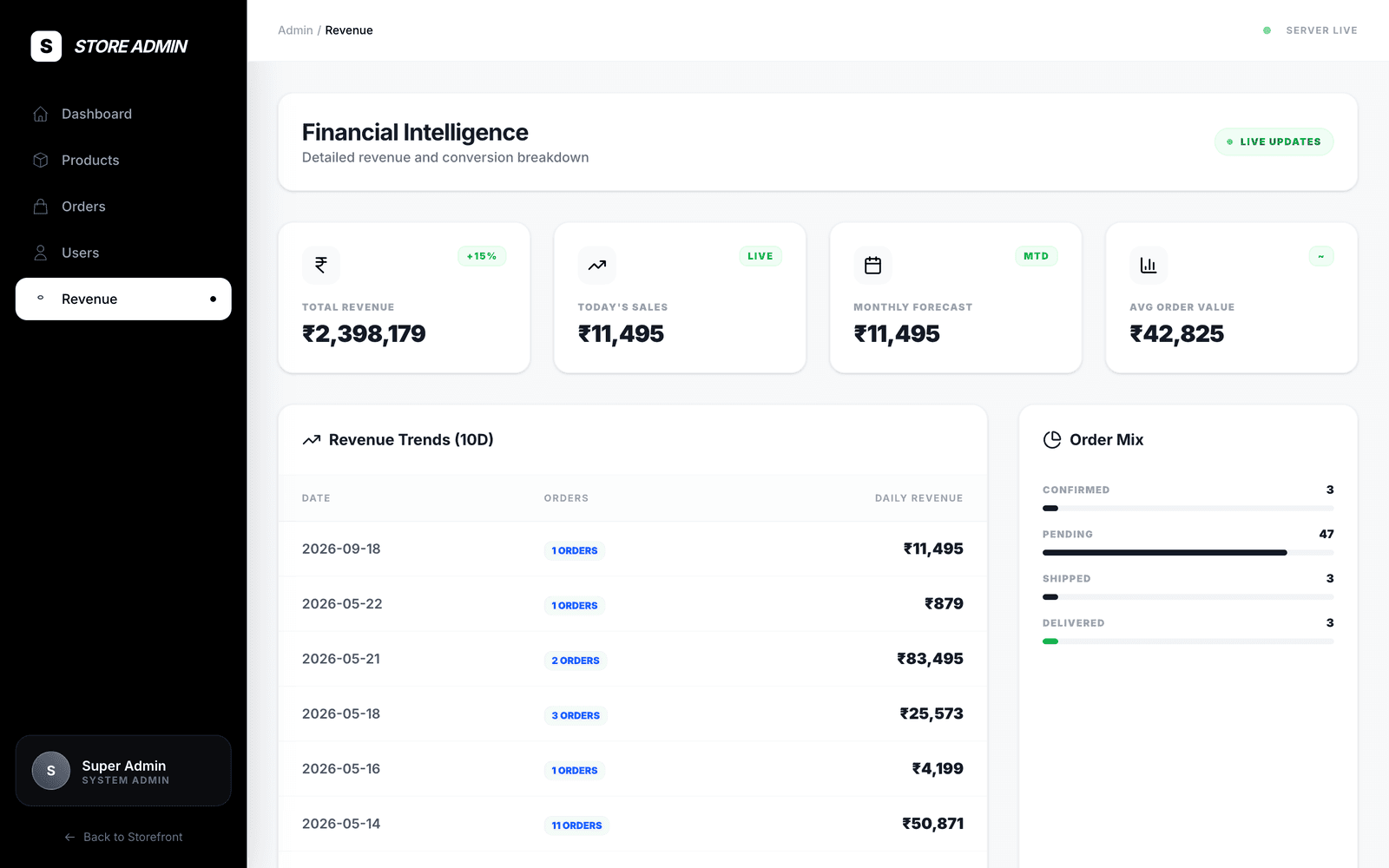
What the numbers say
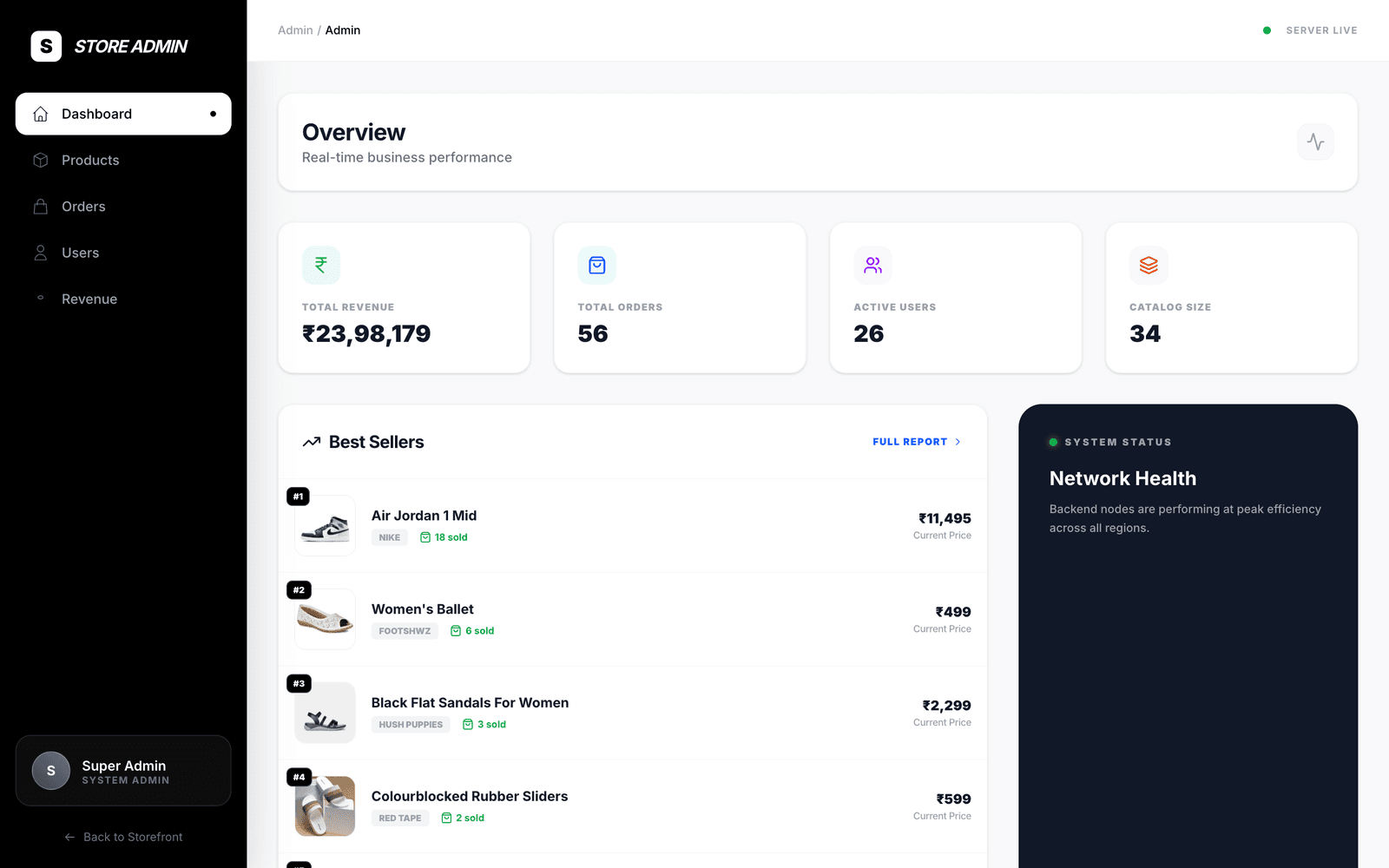
Revenue, orders, active customers and catalogue size on one screen, with best sellers ranked by units. The revenue view breaks that into daily trends, average order value, order mix by status, and which customers are worth the most.
What changed
A working reference for what a full online shop involves, used to show clients the scope before we scope theirs.
The variant model is the reusable part — any business selling the same product in several sizes, colours or grades needs the same structure underneath.