Vehicle service garage
A gate log that knows which vehicles are still inside
BeforeA register at the gate and a guess at the rest. Nobody could say which vehicles were still on the floor or how long they had been there.
NowEvery vehicle and visitor logged in and out, with live counts and a duration on every job.
The situation
A service garage taking in cars, bikes and autos all day — service, repairs, part changes, washes — alongside the visitors, suppliers and delivery people coming through the same gate. All of it went into a paper register.
The register recorded arrivals well enough. What it couldn’t answer was anything about the present: which vehicles were still inside, how long a job had been sitting, or what came through last Tuesday. Those questions meant flipping pages or asking whoever was on the gate that day.
It also had to work for the guard on the gate and the owner in the office at the same time, without the guard being able to see or change anything beyond his own screen.
What I built
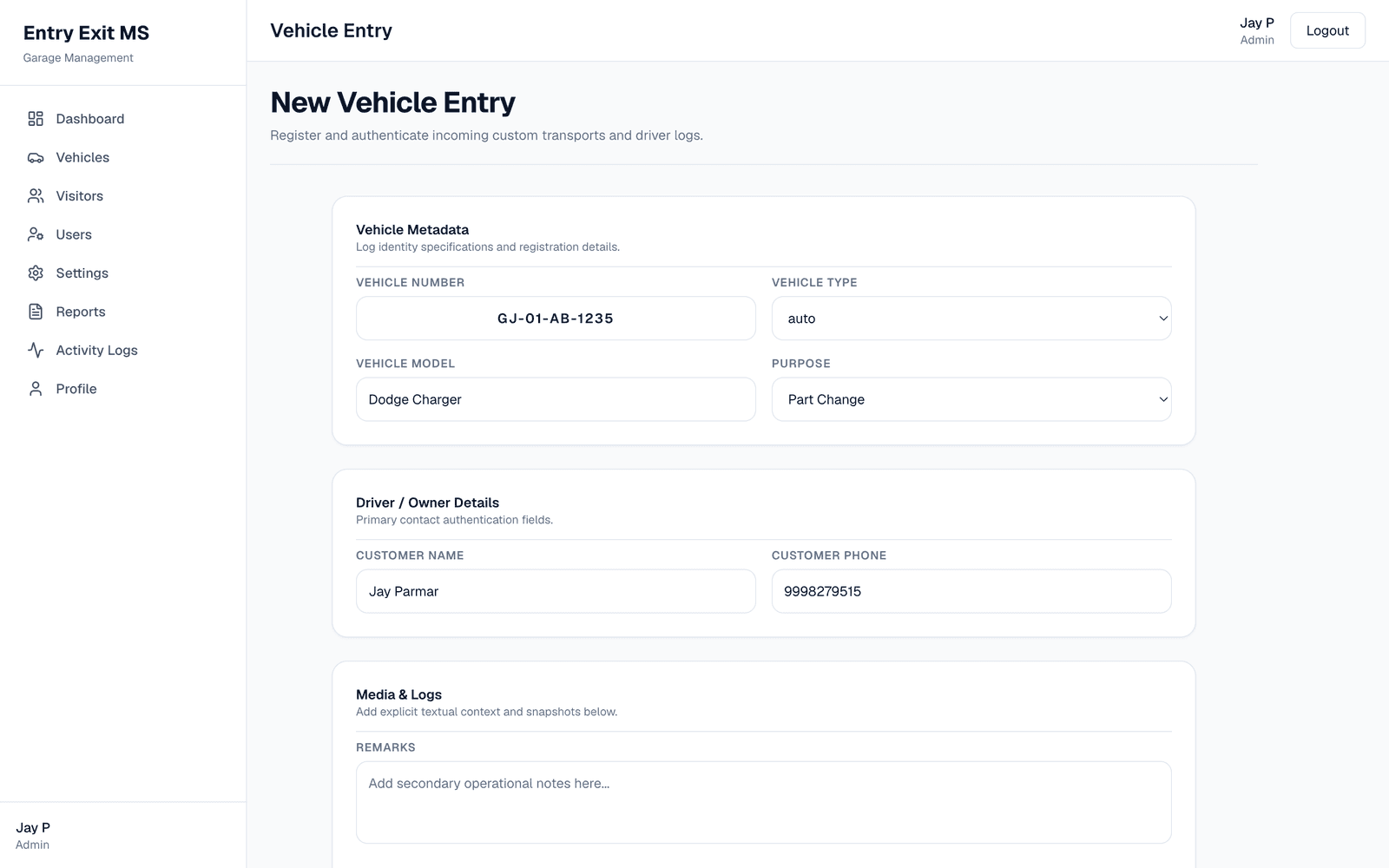
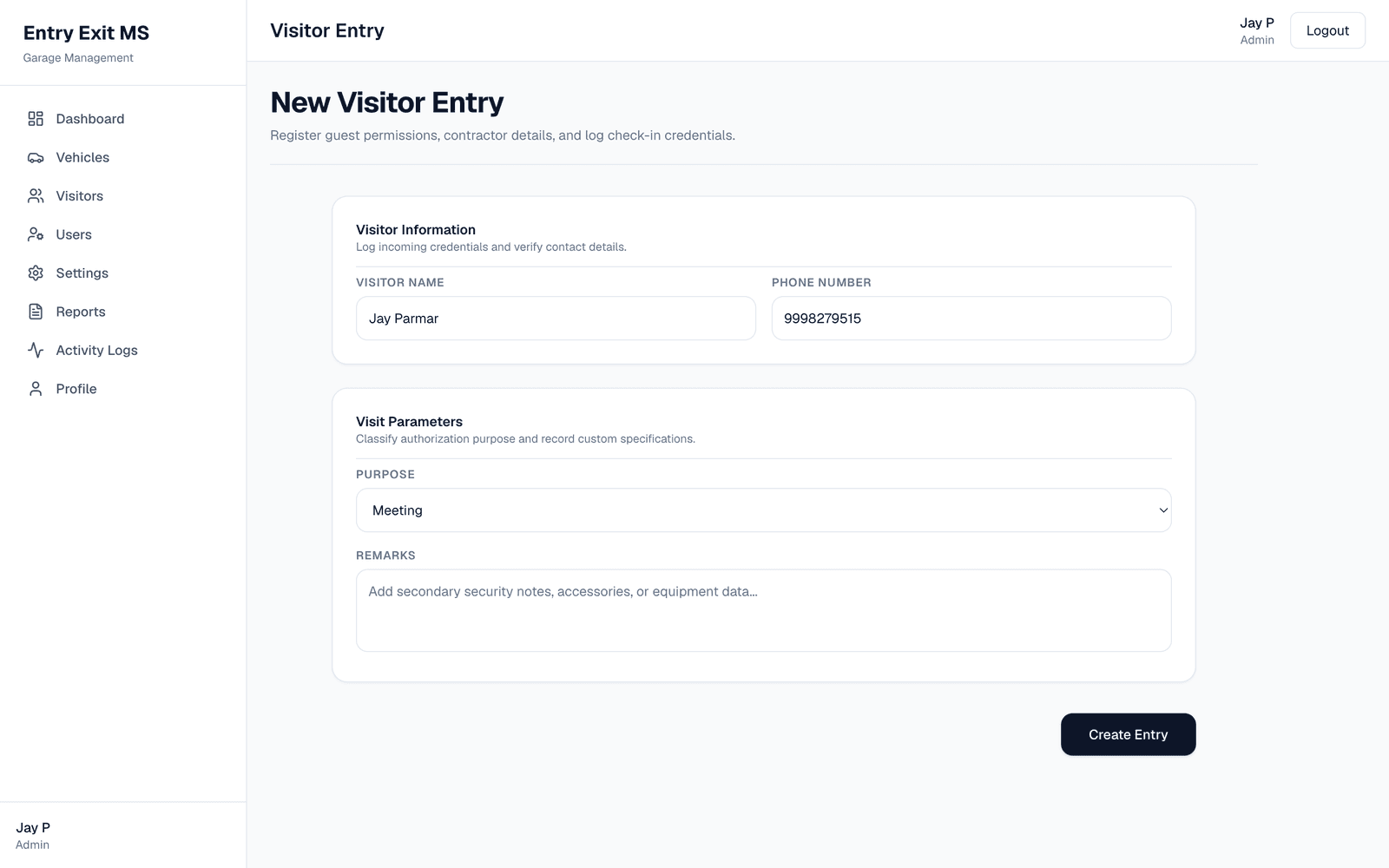
At the gate
The guard logs a vehicle with its number, type, model and why it came in, or a visitor with their purpose — and nothing else. Both forms are short enough to fill in while someone waits at the gate.
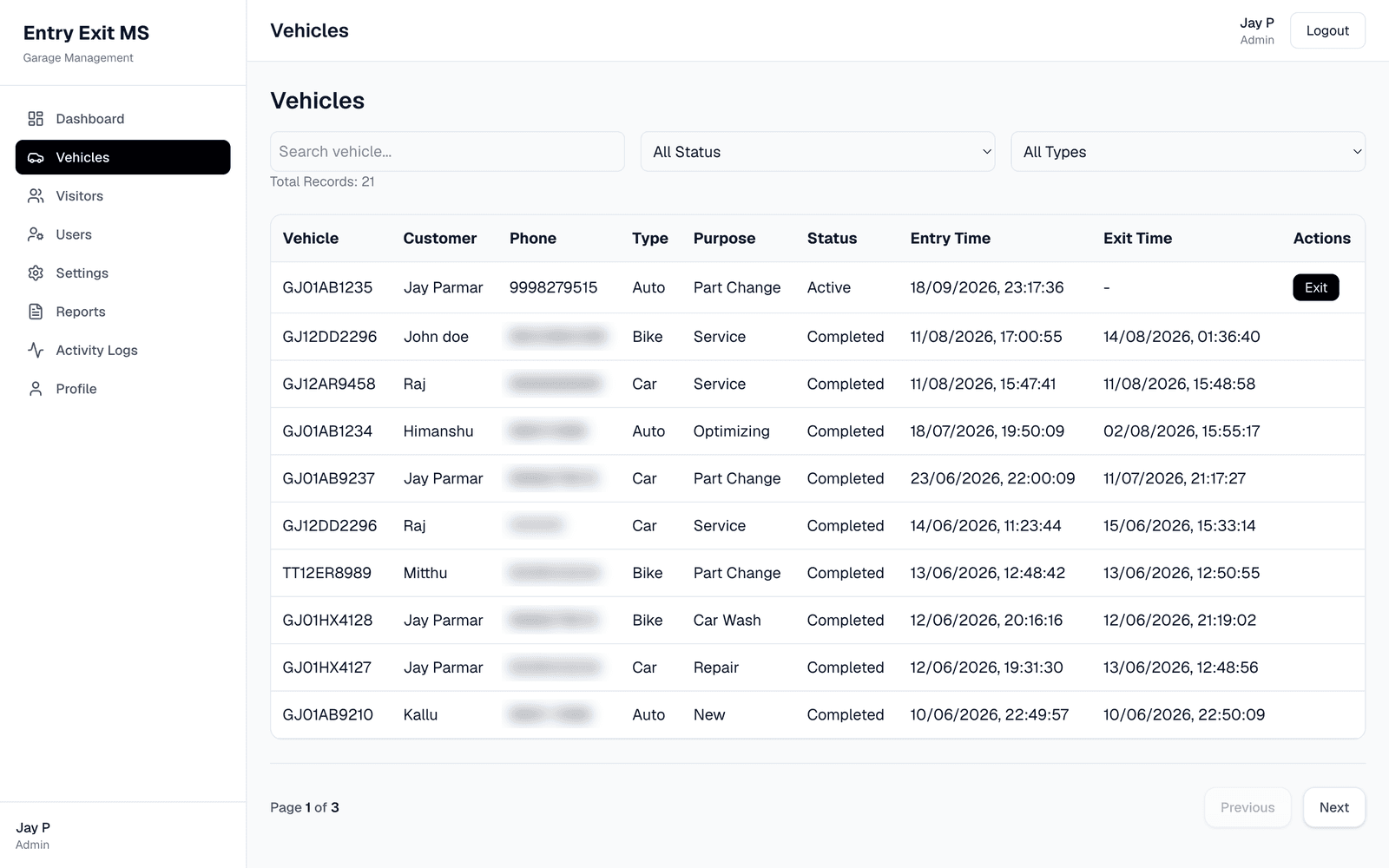
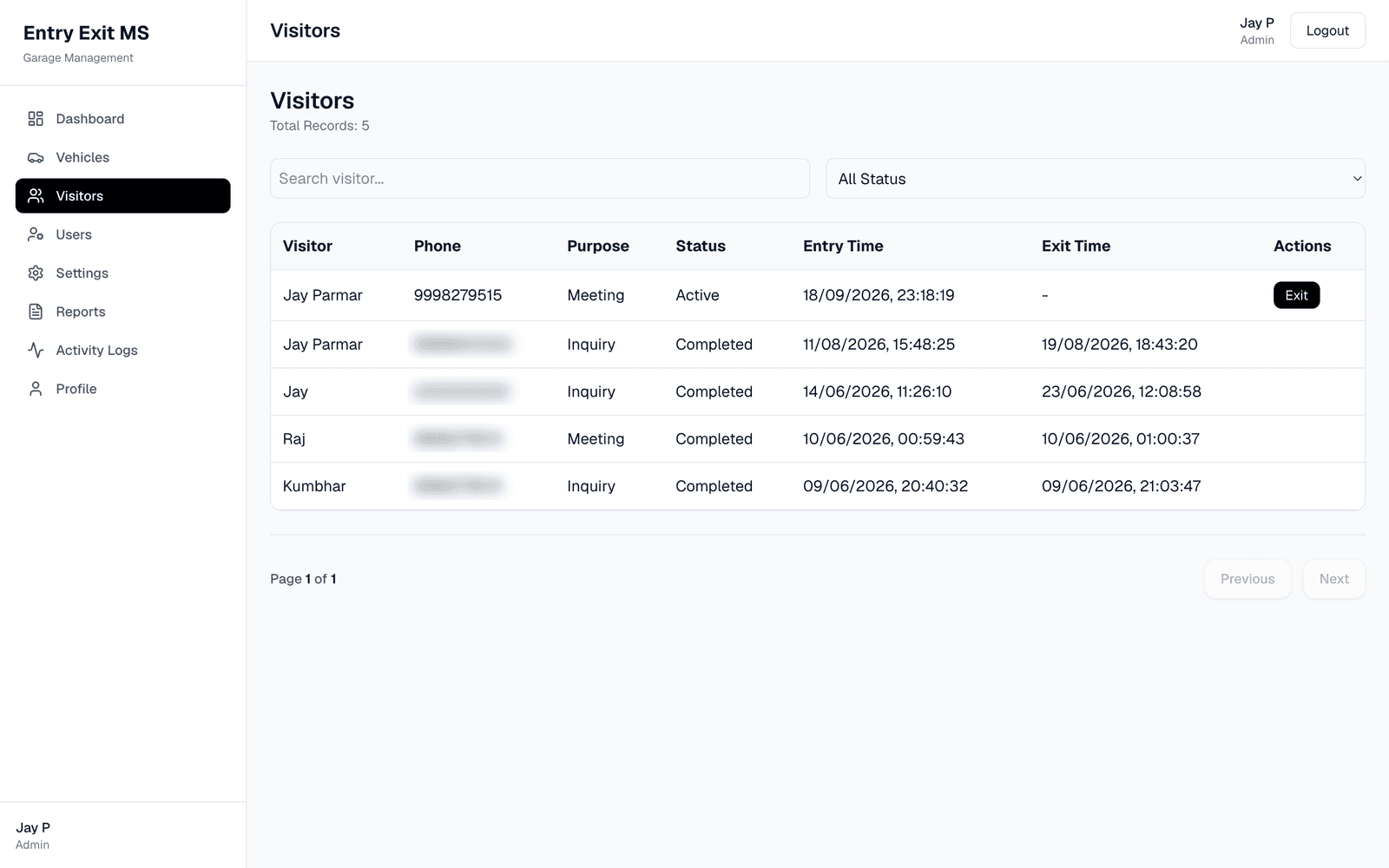
What’s on site
Anything still inside shows as active with an Exit button next to it; everything else carries its entry and exit time. The dashboard counts vehicles and visitors currently on site and tracks the week’s movement.
Reports
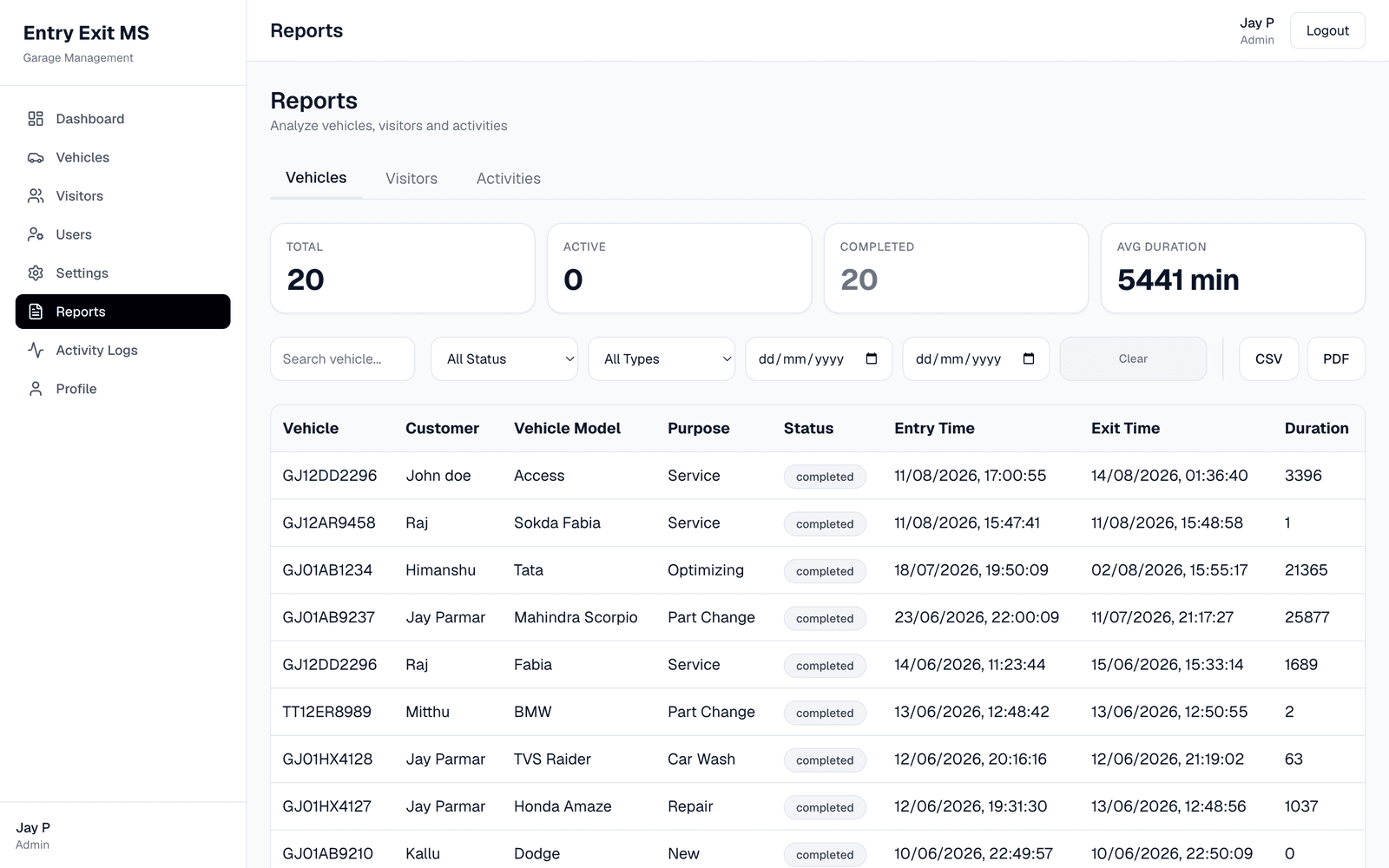
Vehicles, visitors and activity over any date range, with the duration of every job and an average across them — the number that tells the owner whether work is moving. Exports to CSV or PDF.
Roles and audit
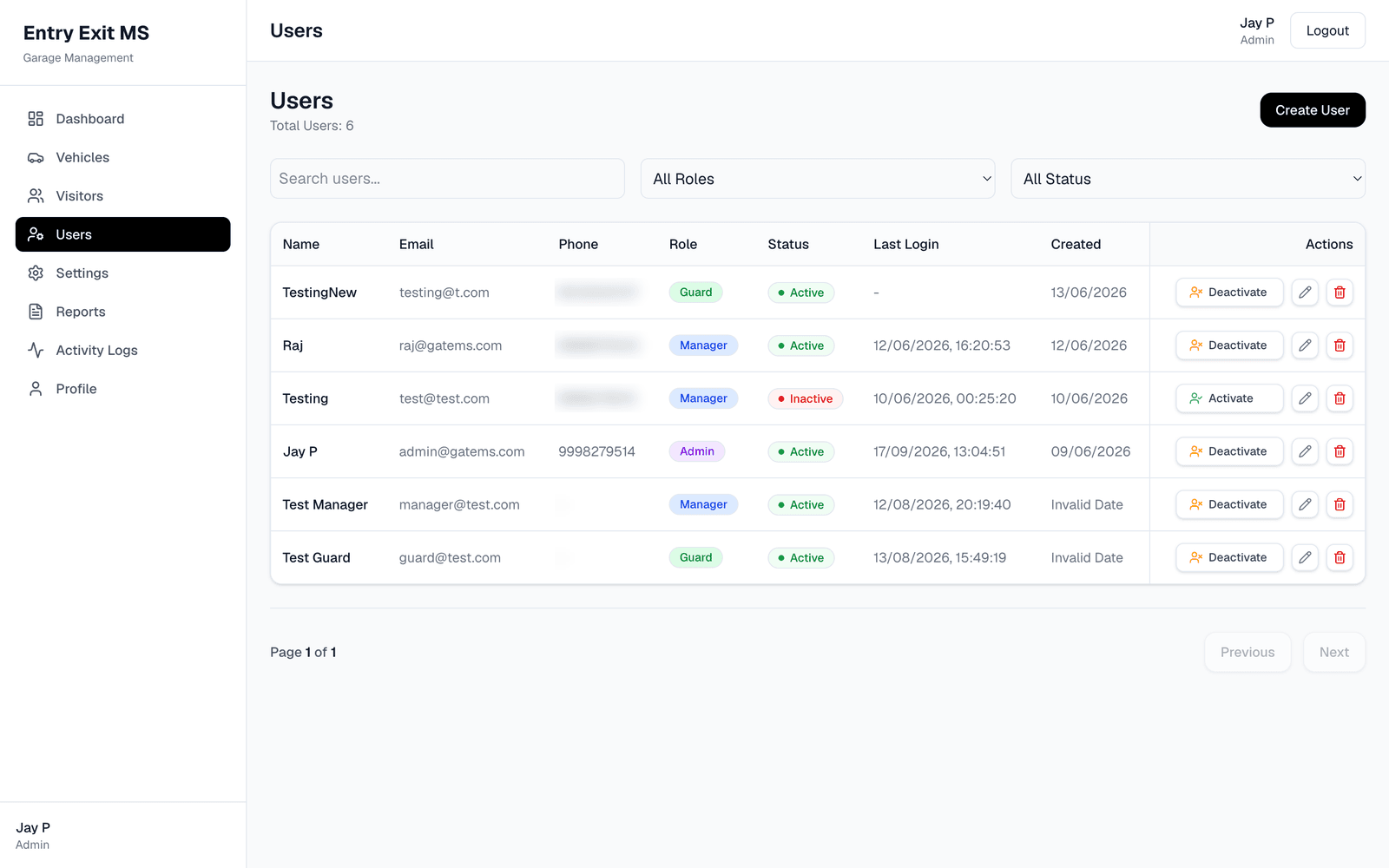
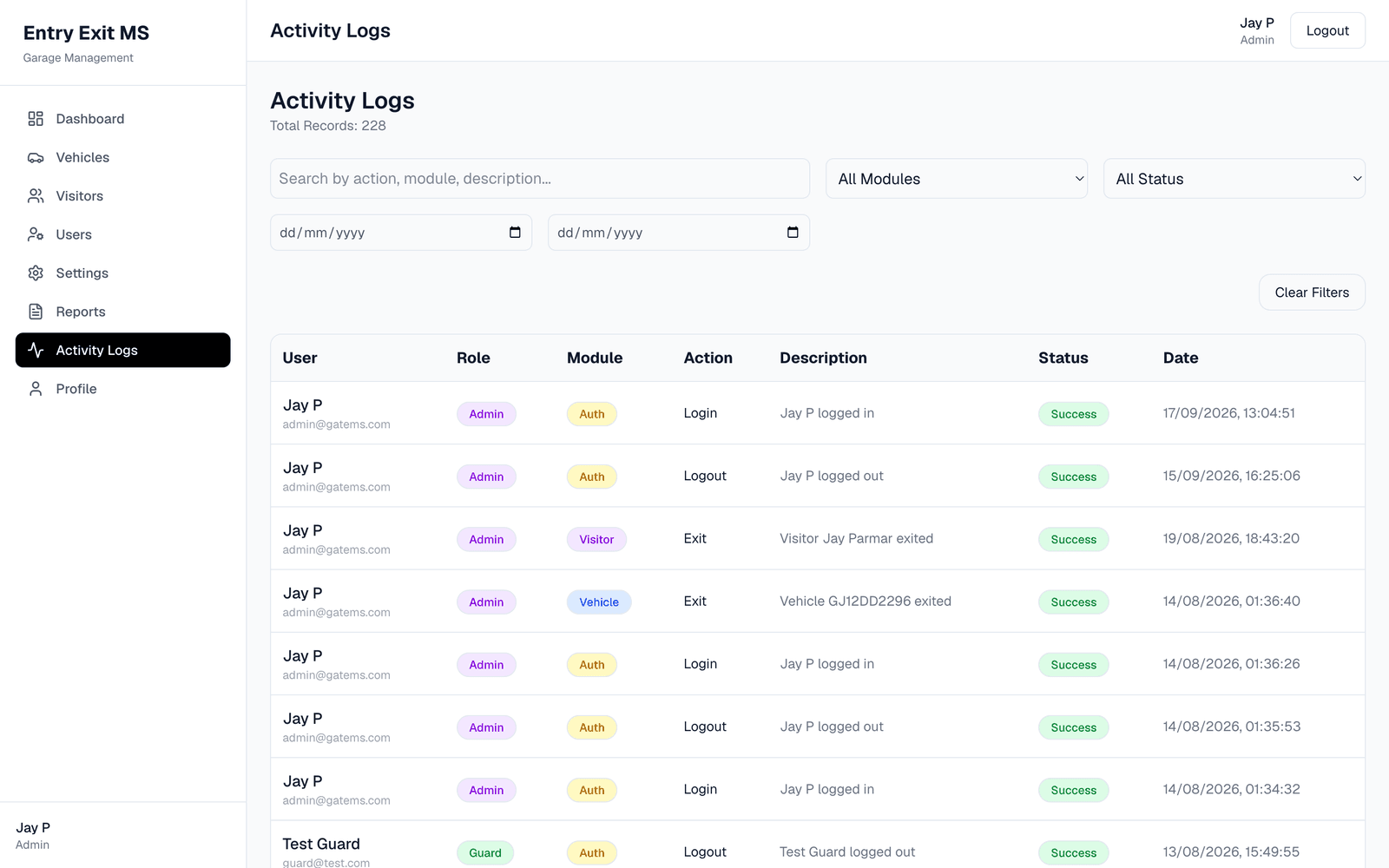
Guard, manager and admin each get their own view, and accounts can be deactivated without deleting the history attached to them. Every action is logged against a person, so a missing exit is traceable rather than argued about.
Set up for the business
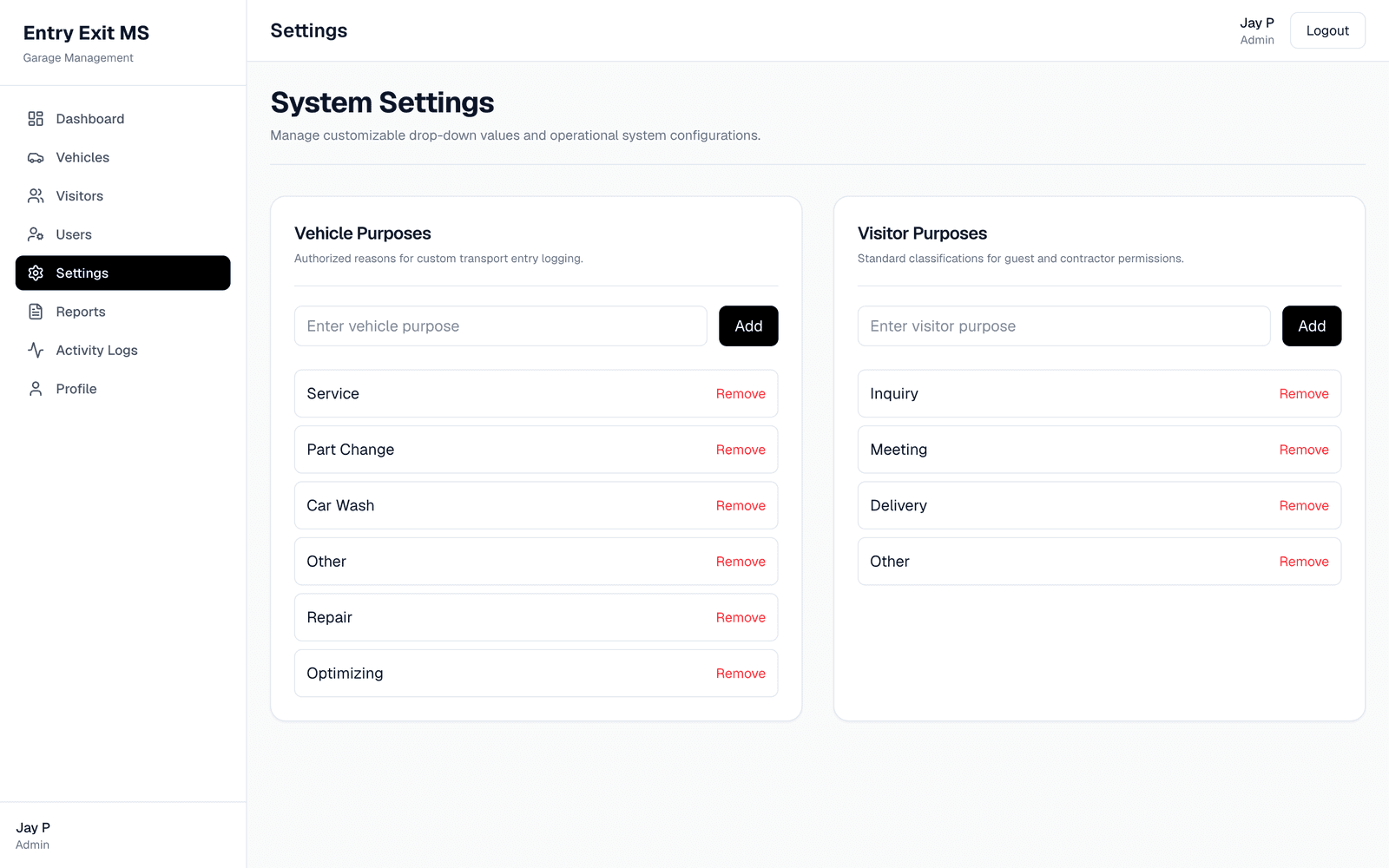
Entry reasons are the owner’s to define — service, part change, car wash, whatever this business actually does — so the dropdowns match the trade instead of forcing it into someone else’s categories.
What changed
“Which vehicles are still inside” became a screen instead of a walk around the floor.
Job durations are now a number the owner can look at, which they never had from the register.
Built to run across more than one location, so a second branch is a setting rather than a second system.